Here’s something worth smiling about: staying optimistic may actually help you stay stronger, steadier, and more independent as you age.
And this isn’t just feel-good advice. A major Harvard-led study found that older adults with a more positive outlook experienced better physical function over time, including stronger grip strength, better mobility, and healthier ageing overall.
What the Harvard Study Found
Researchers followed nearly 6,000 women aged 65 and over across six years to explore the link between optimism and healthy ageing.
At the start of the study, participants answered questions designed to measure optimism, including how strongly they believed good things would happen in the future.
Researchers then measured three important indicators of physical health and independence:
- Grip strength
- Walking speed
- Ability to stand from a chair without using hands
The results were clear.
Women who were more optimistic showed:
- Stronger grip strength
- Better lower-body strength
- Slower physical decline over time
- Better balance and mobility as they aged
In simple terms? A positive mindset was linked to staying physically capable for longer.
Why Optimism Matters for Healthy Ageing
Researchers believe optimism supports healthy ageing in several ways.
People with a more positive outlook are often more likely to:
- Stay physically active
- Eat well and look after themselves
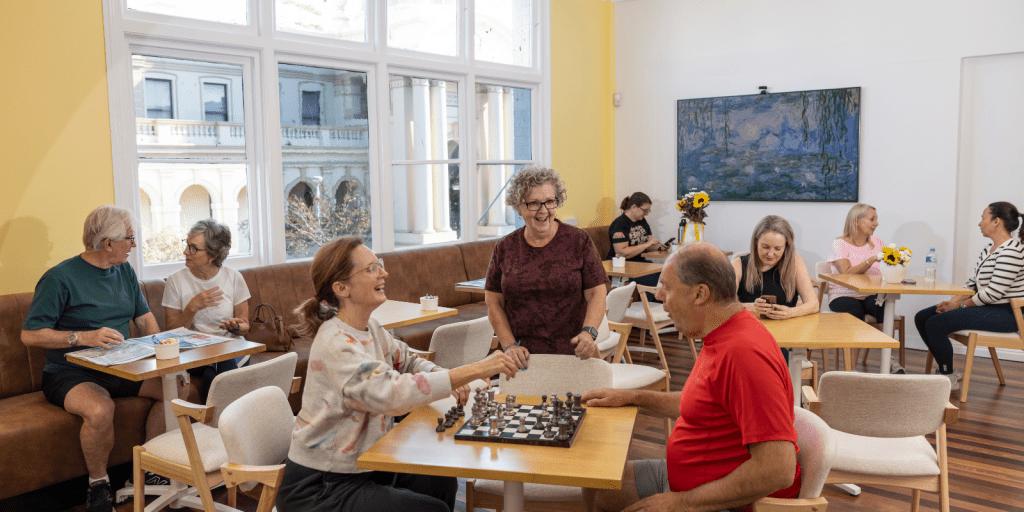
- Stay socially connected
- Participate in community activities
- Recover better from stress
There may also be physical benefits happening behind the scenes, including:
- Lower stress levels
- Better immune function
- Healthier blood pressure
- Reduced inflammation
Together, these habits and health benefits can help support strength, movement, and independence after 50.
The Good News: Optimism Can Be Built
One of the most encouraging findings from the study is that optimism is not fixed.
Like strength or fitness, it’s something you can practise and build over time.
At The Monday Club, we see this every day. Small positive habits, movement, connection, routine, and community, can make a real difference to how people feel physically and emotionally.
Simple Ways to Build More Optimism
You don’t need to completely change your life. Small steps matter.
- Focus on One Good Thing
Start your morning by thinking about one thing you’re looking forward to, even something simple like coffee with a friend or a walk outdoors. - Keep Moving
Regular movement supports both physical and mental wellbeing. Even gentle exercise, walking, or chair-based strength work can help. - Stay Connected
Social connection plays a major role in positive ageing. Join a class, call a mate, attend a community event, or simply spend time around others. - Be Kind to Yourself
Optimism doesn’t mean pretending everything is perfect. It simply means believing things can improve, even during difficult periods.
The Takeaway
Healthy ageing isn’t only about exercise and nutrition. Your mindset matters too.
Research now shows that optimism may help older adults maintain strength, mobility, confidence, and independence for longer.
And often, it starts with small things:
A conversation.
A walk.
A class.
A sense of belonging.
That’s what good ageing looks like, and it’s exactly what The Monday Club is all about.