Why protein matters more after 50
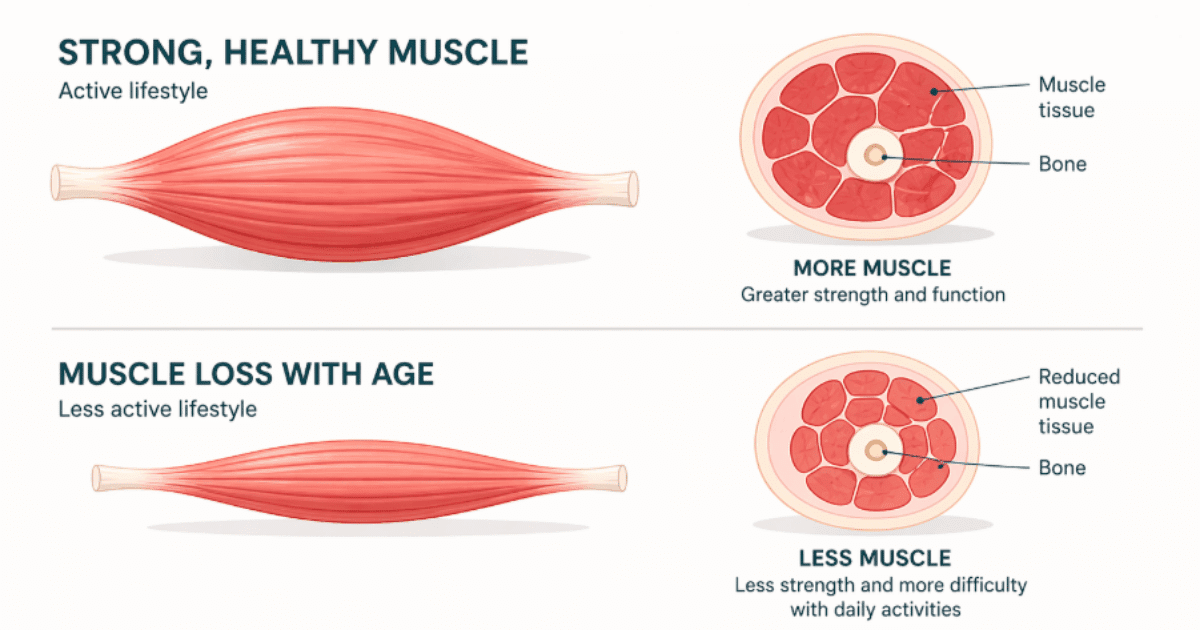
As we age, our bodies naturally become less efficient at maintaining muscle.
That’s not a problem , it’s just part of getting older. But it does mean we need to be a bit more intentional about supporting our strength.
Protein helps your body to:
- Maintain muscle strength
- Support recovery after activity
- Keep you feeling fuller for longer
- Maintain steady energy throughout the day
And when your muscle strength is supported, so is everything else , your balance, your mobility, and your independence.
The common protein gap (and why it matters)
Here’s the thing most people don’t realise:
It’s not that they’re eating no protein , it’s that they’re not getting enough across the day.
It often looks like this:
- A light breakfast (toast, maybe coffee)
- A quick or small lunch
- A protein heavy dinner
By the end of the day, it can even out. But your body works better when protein is spread more evenly.
Over time, that imbalance can make it harder to maintain strength, recover well, and keep your energy up.
How much protein do you actually need?
You don’t need to overthink it.
A simple, realistic guide for most people over 50 is:
Aim for 20–30 grams of protein at each meal
This doesn’t have to be exact , it’s just a helpful benchmark.
What that looks like in real life
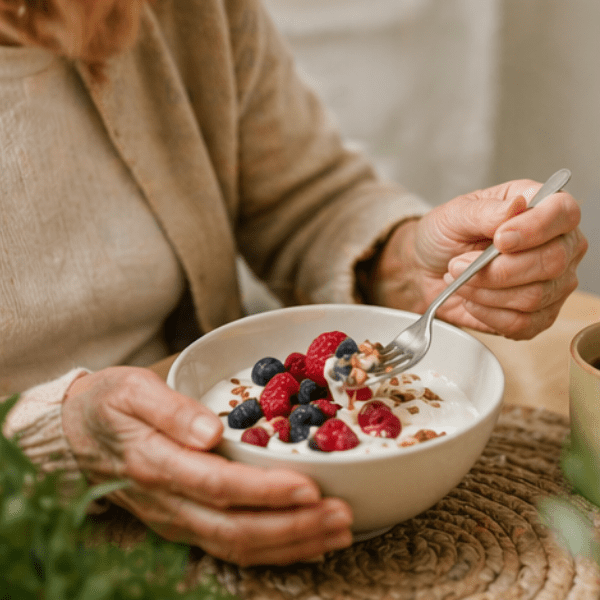
- Breakfast: eggs, yoghurt, or even a smoothie with protein
- Lunch: chicken, fish, tuna, or legumes in a sandwich or salad
- Dinner: meat, tofu, beans, or lentils
The key idea is simple:
Include some protein at every meal, rather than saving it all for dinner

Easy ways to add more protein (without overthinking it)
You don’t need to change everything. Small shifts go a long way.
Some simple options:
- Add yoghurt or eggs to your breakfast
- Include a protein source in your sandwich or salad
- Make sure dinner isn’t just vegetables or carbs
- Keep easy options on hand (like tinned tuna, boiled eggs, or beans)
These are the kinds of changes that fit into real life , and stick.
Protein works best alongside movement
Protein is only part of the picture.
It works best when your body is actually using your muscles , particularly strength based movement.
That doesn’t mean lifting heavy weights or doing anything extreme.
It can be as simple as:
Regular strength classes
Light resistance training
Staying active through the week
When you combine movement with the right nutrition, your body responds.
- Move regularly
- Eat consistently
That combination makes a real difference over time.
A simple way to think about it
Instead of asking:
“Am I getting enough protein?”
Try this:
“Do I have some protein in each meal?”
It’s easier to stick to , and much more effective.
You don’t have to do this alone
At Monday Club, we see this every day.
People don’t need perfect plans or strict rules. They just need simple guidance, a bit of structure, and the right support around them.
Sometimes it’s swapping ideas over a coffee.
Sometimes it’s learning what works for your body.
Sometimes it’s just having a place where it all feels doable.
That’s where real change happens.

The takeaway
You don’t need a perfect diet.
You just need a bit more awareness , and a few small habits that you can stick with.
Because when it comes to ageing well, it’s the simple things , done consistently , that keep you strong, steady, and living life on your terms.